
What this service covers
- Railing and stair repair on an existing deck.
- New railings built to code and matched to your deck's style.
- Stair framing and stringers.
- Material selection: wood, composite, cable or metal railings.
- Baluster spacing to meet code requirements.
The numbers that matter in Virginia
Virginia's stair rules aren't the ones most national deck articles quote. Fairfax County's Typical Deck Details, based on the 2021 Virginia Residential Code, set a maximum riser height of 8¼ inches and a minimum tread depth of 9 inches, with no more than ⅜ inch of variation from step to step. Stairs must be at least 36 inches wide, need a handrail 34 to 38 inches high once there are four or more risers, and each stairway must be lit.
Guards are required where a deck is more than 30 inches above grade at a point 36 inches out from the edge. The minimum guard height is 36 inches, and no opening may let a 4-inch sphere pass through. The Fairfax details also prohibit notching guard posts and call for hold-down anchors rated at least 1,800 pounds. Our Virginia stair and guard guide explains each rule and why it exists.
Repair or replace the railing?
A single loose baluster or a cap rail with a split is a repair. A guard post that moves when you lean on it is a different problem: the post is usually rotted at its base, notched, or attached with fasteners that were never meant to resist that kind of load. Fixing it properly may mean new posts with code-compliant hold-downs, and once several posts need that, a new railing system is often the cleaner job.
Stairs fail at the bottom
Stringers sit close to the ground, collect water and debris, and are often the first framing on a deck to rot. Look at where the stringers meet the landing or the ground and at the top connection to the deck rim. A step that rocks, a tread that sags, or a stringer that's split are reasons to stop using the stairs until they're repaired. Loudoun County lists stair riser variation over the code allowance among the most common reasons deck inspections fail, so new stairs get laid out carefully before they're cut.
Railings on a screened porch or a covered deck
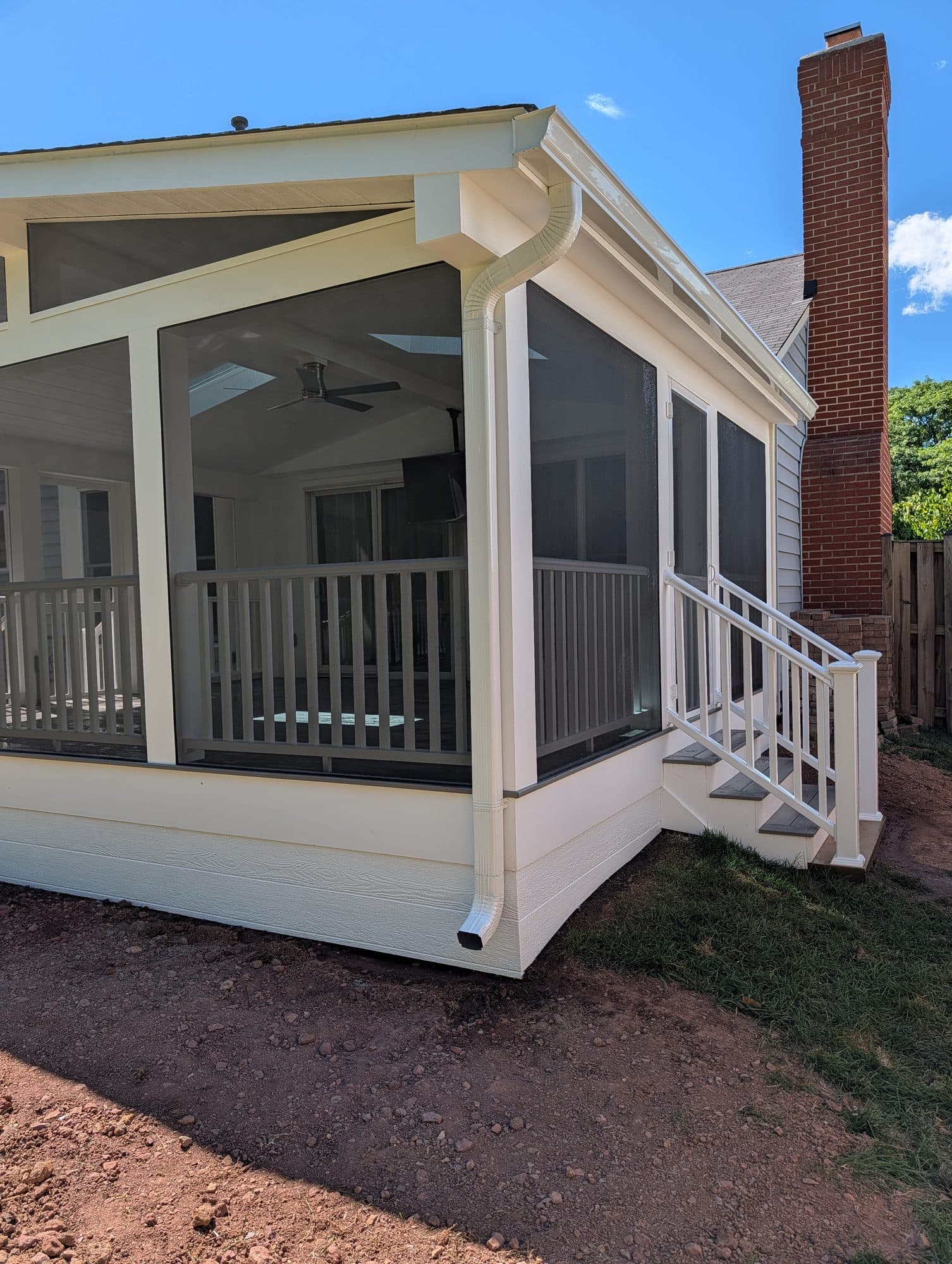
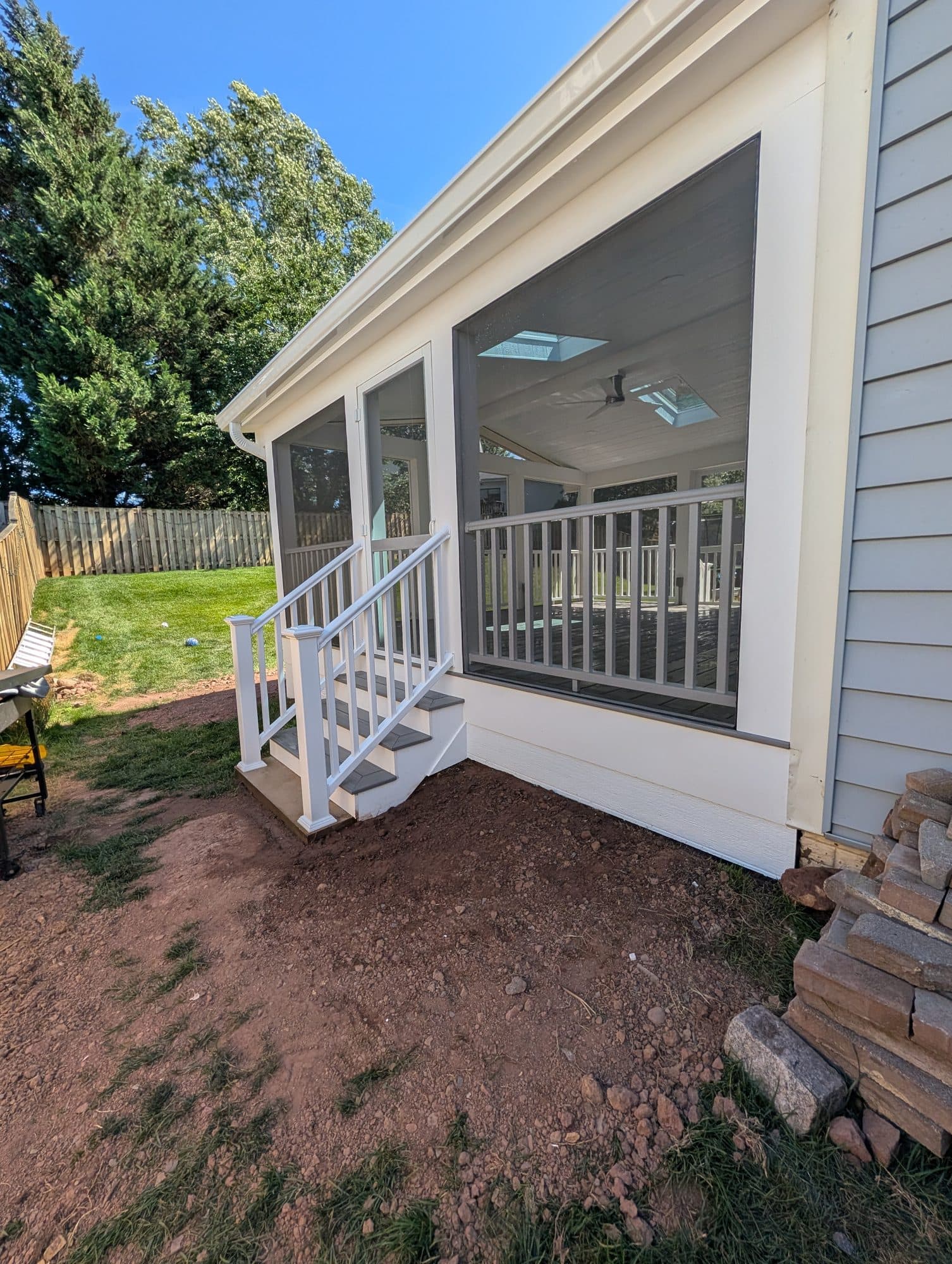
Railings and stairs connect to everything else: the deck surface, fascia, trim, lighting and the house exterior. On the Herndon screened-in porch shown here, the stairs and railing were built as part of the porch project. If you're planning railings alongside a porch, lighting or privacy feature, plan them together.
What railings and stairs typically cost
The Deck Defenders cost guide lists $2,500–$10,000 for railings and stairs as a typical Northern Virginia reference range. Length of railing, number of stair runs, material and the condition of the framing they attach to decide the number.
Sources
Related pages
How tall does a deck railing have to be in Virginia?▸
At least 36 inches where a guard is required, according to the 2021 Virginia Residential Code and Fairfax County's Typical Deck Details. A guard is required where the deck is more than 30 inches above grade at a point 36 inches from the edge.
What's the maximum stair riser height in Virginia?▸
8¼ inches, with a minimum tread of 9 inches, under the 2021 Virginia Residential Code as reflected in Fairfax County's deck details. That's different from the national model code many articles quote.
Which railing materials do you install?▸
Wood, composite, cable and metal (including aluminum) railing options, chosen to match the rest of the deck.
Can you add stairs to an existing deck?▸
Possibly. The existing framing, footings, connections, landing area and grade need to be evaluated before a new stair run is designed.
Book a free deck safety inspection
Call (703) 731-9208 (Monday – Saturday, 8:30 AM – 6:00 PM) or use the request-an-estimate page and choose Free Deck Safety Inspection. Deck Defenders will check the ledger, posts and footings, framing, boards, railings, stairs and connectors, tell you what we found and, if work is needed, give you a repair or replacement estimate. No obligation.
Request an Estimate