
Think in layers
A deck has a surface (boards, railings, stair treads), a frame (joists, beams, posts, stringers), connections (the ledger to the house, hangers, post bases, guard post anchors) and a foundation (footings). Problems in the surface layer are repair problems. Problems in the connections and foundation are often replacement problems, because fixing them means taking most of the deck apart anyway.
Signs a repair is probably enough
- Boards that are faded, splintered, cupped or cracked, while the joists under them are firm.
- A few soft boards in one area, such as under a planter or downspout, with sound framing around them.
- Fasteners popping up above the surface.
- A loose baluster or cap rail on otherwise solid posts.
- A worn finish that needs cleaning and resealing.
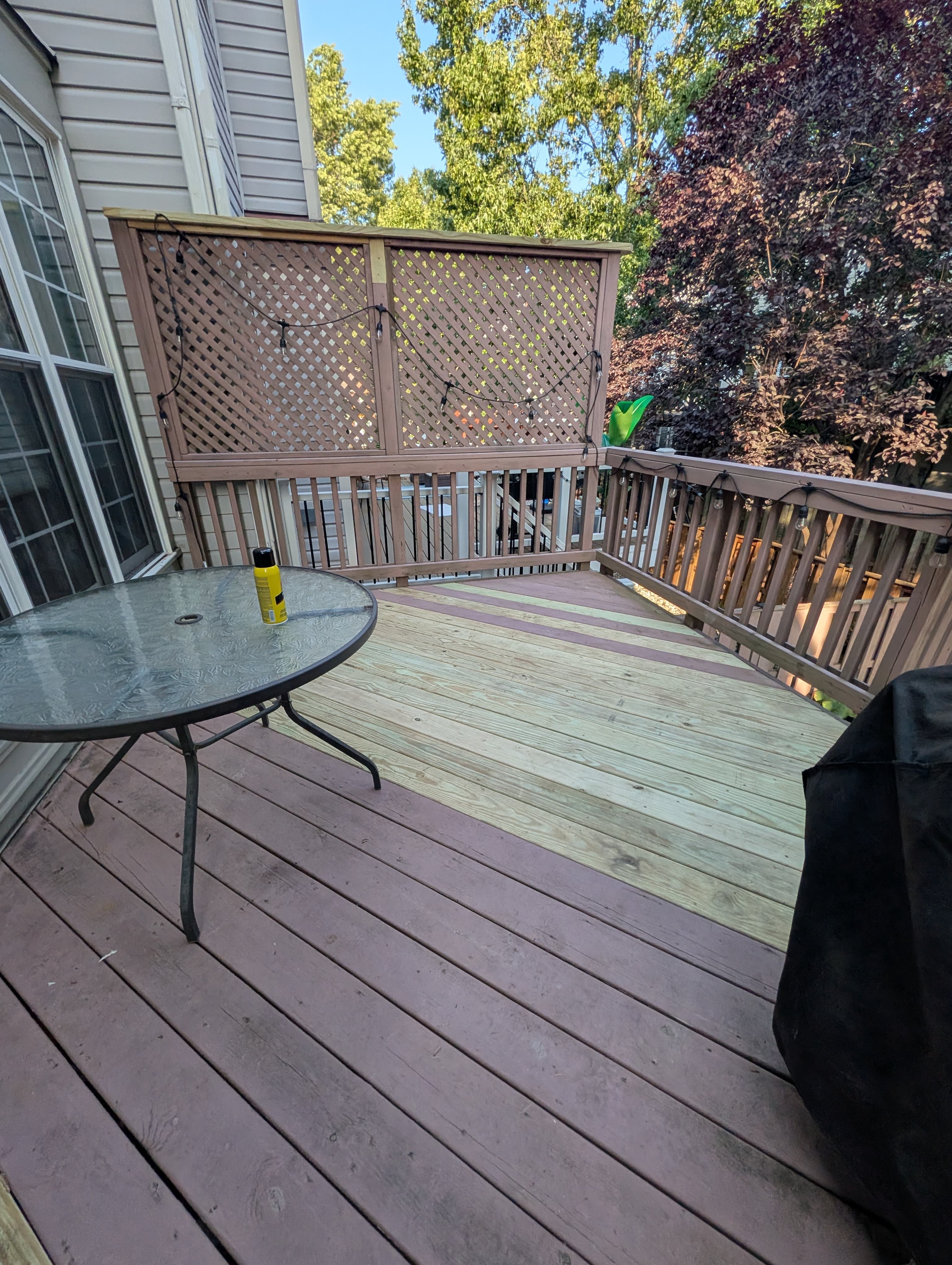
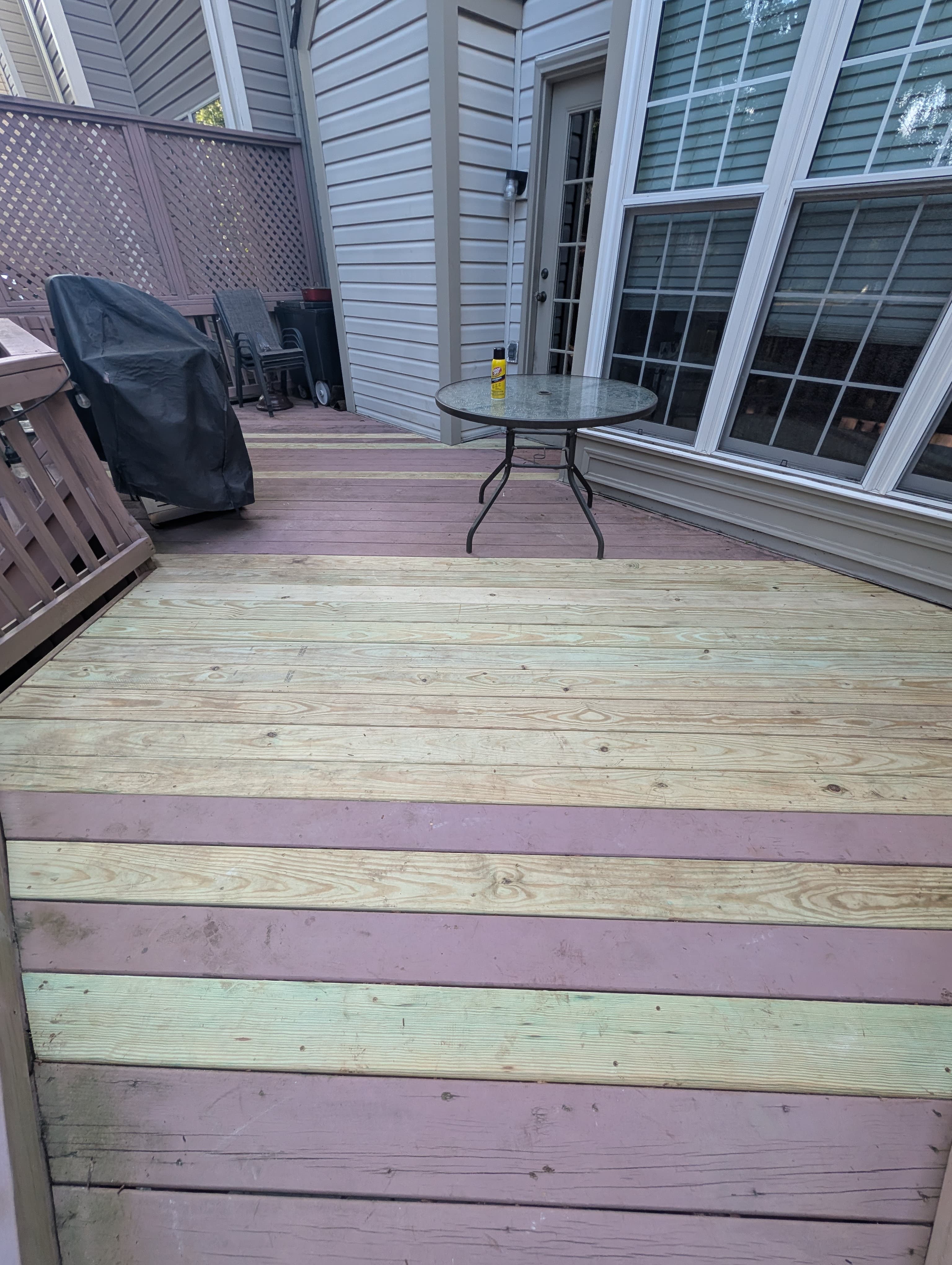
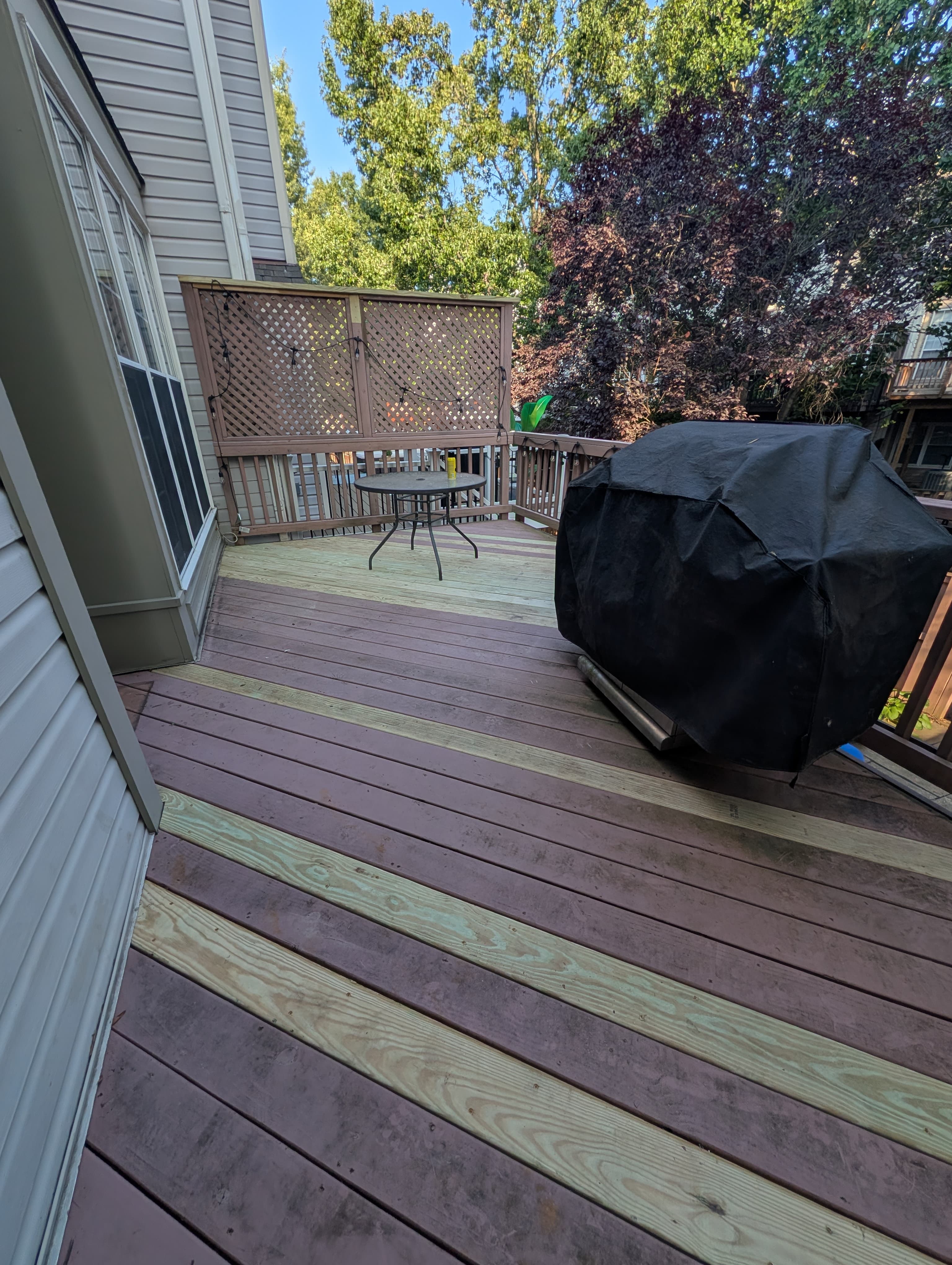
That's the situation our Sterling project was in: damaged and worn boards on a structure worth keeping. Deck Defenders replaced the bad boards and resurfaced the deck rather than rebuilding it.
Signs it may be time for replacement
- Rot in joists, beams or posts beyond an isolated spot. NADRA's checklist suggests that if a screwdriver pushes ¼ to ½ inch into the wood, or it feels soft and spongy, decay may be present.
- A ledger that's nailed to the house, has no flashing, or is attached to brick veneer, a chimney or a bay window, all of which Fairfax County's details prohibit.
- Posts that lean, are cracked at the base, or sit on footings that have heaved or settled.
- A deck that sways or bounces noticeably when people walk across it.
- Hangers and connectors that are badly rusted, a sign the hardware wasn't rated for treated lumber.
- Guard posts that move when pushed, especially notched posts, which Fairfax's details prohibit.
Age is a reason to look, not a verdict
Fairfax County's building official has said that a deck built and inspected to code and properly maintained should last 20 years or more. NADRA's Deck Safety Month message is that if your deck is 20 years or older, it's time to take a serious look. Neither is an expiration date. A 25-year-old deck with a bolted, flashed ledger and deep footings may only need boards. A 12-year-old deck built without a permit may need replacing.
How to check the parts that decide it
Under the deck
Go underneath with a flashlight. Look at the tops of joists near the house, where water collects, and at joist ends along the rim. Probe a few spots. Check that joists sit in metal hangers rather than on nails alone.
At the house
Find the ledger, the board against the house that the joists hang from. Look for bolts (good), only nails (a concern), flashing over the top edge (good), and staining or rot on the house rim behind it (a concern). Check whether it's fastened to siding over framing, or to brick.
At the ground
Look at posts where they meet the footing. Wood buried in soil, posts on flat stones or blocks, and concrete that's cracked or tilted all point to foundation problems.
Stairs and railings
Push on guard posts at the top of the stairs and along the edge. Walk the stairs and feel for rocking treads. Check the bottom of the stringers, which sit closest to wet ground.
The cost question
The Deck Defenders cost guide lists $2,000–$10,000 for deck repair and resurfacing and $8,000–$18,000 for a basic custom deck, as typical Northern Virginia reference ranges. When a repair scope grows to include joists, posts, ledger work and railings, it's worth pricing replacement alongside it. The new deck gets current footings and ledger details and a fresh surface; the repair keeps what's still sound.
Permits on either path
A replacement needs a permit: Fairfax County says so for new and replacement decks, and Loudoun requires a building and zoning permit for all decks. Whether a repair does depends on the scope and the local building official. We confirm for your project.
Sources
Related pages
Can I just put new boards on an old deck frame?▸
Only if the frame, ledger and footings are sound and the joists are suitable for the new decking. Resurfacing over a failing structure hides the problem instead of fixing it.
How long should a deck last?▸
Fairfax County's building official has said a deck built and inspected to code and properly maintained should last 20 years or more. Condition matters more than age.
Is a bouncy deck dangerous?▸
Not always, but it's a reason to have the framing and connections looked at. Bounce can come from undersized joists, missing blocking, or loose connections.
What's the most important thing to check?▸
The ledger connection to the house. NADRA's checklist calls the ledger a common source of deck failure.
Want a second set of eyes? The inspection is free.
Deck Defenders offers a free deck safety inspection to homeowners in the Fairfax and Loudoun communities we serve: a visual check of the areas this guide covers. We'll tell you what we found and, if work is needed, give you a repair or replacement estimate, with no obligation. It isn't a county permit inspection or a licensed home inspection. Call (703) 731-9208 or request it online.
Request an Estimate